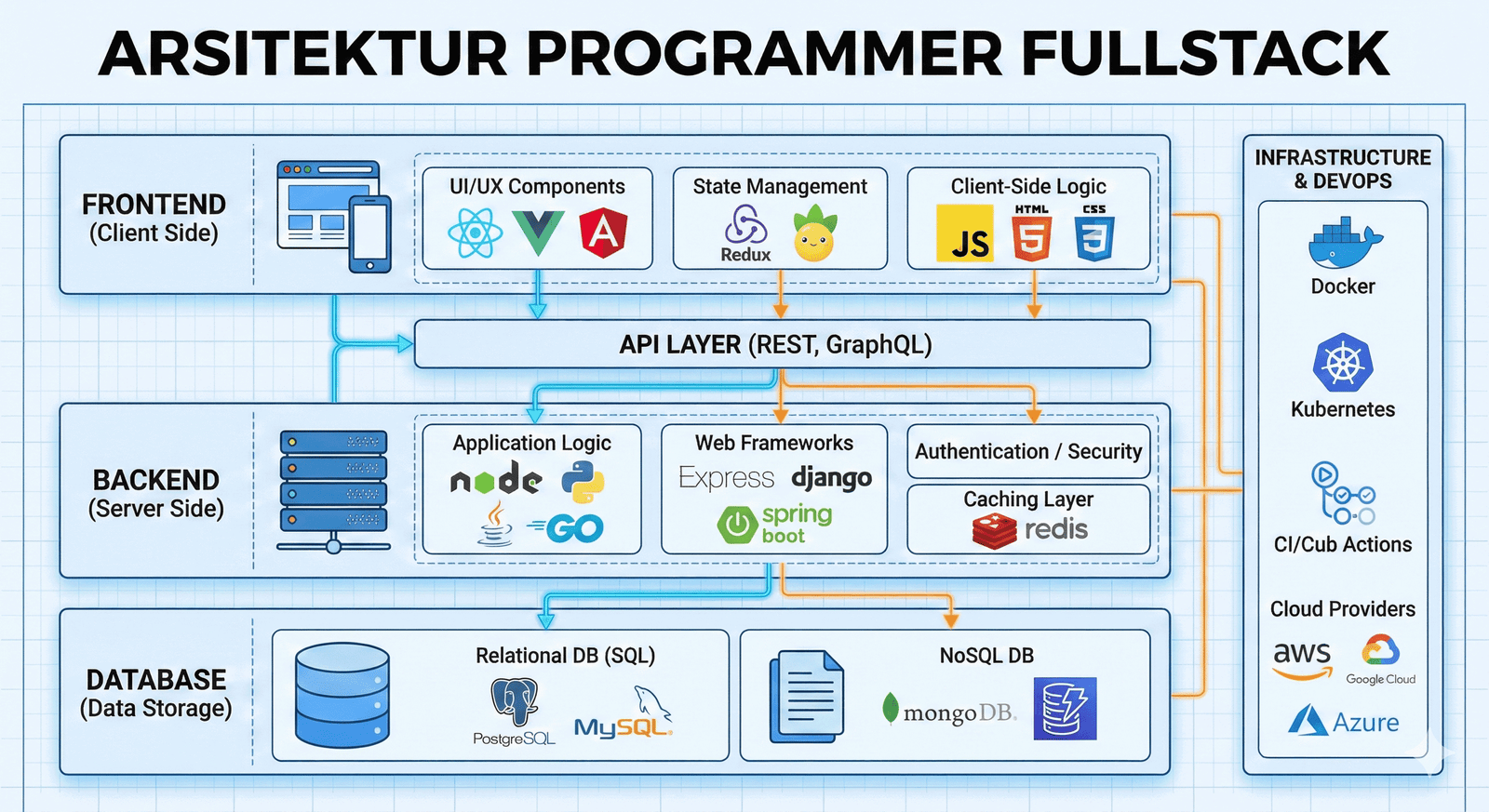
Imagine this horror scenario:
It’s 3:00 AM. You’re sound asleep. Suddenly, your phone explodes with notifications from PagerDuty or Slack. Production is down. CPU usage is hitting 100%. Thousands of users are failing to complete transactions. Your boss is calling, frantic.
You open your laptop with bleary eyes, check the logs, and find the culprit: It wasn’t a bug in your code. It wasn’t a database explosion.
Instead, a third-party API (like a payment gateway or a shipping provider) is experiencing a massive slowdown—taking, say, 30 seconds per request.
Because of that one sluggish external service, thousands of requests in your Node.js application are piling up, pending, consuming memory, and eventually choking your entire server to death. This is known as a Cascading Failure. One domino falls and takes the rest of the system with it.
Welcome to the real world of backend development.
This tutorial isn't going to teach you how to make a "Hello World" app. We’ve moved past that. Today, we’re learning how to be real engineers. We’re going to build a Node.js application that is "Anti-Fragile".
We will implement a crucial architectural pattern called the Circuit Breaker.
What is the Circuit Breaker Pattern?
Think about the electrical circuit breaker in your house. If there is a dangerous power surge (perhaps from lightning or a short circuit), what happens? Do your TV and refrigerator instantly explode?
No. The circuit breaker "trips," automatically cutting off the flow of electricity. The lights go out temporarily, but your expensive electronics are saved.
In the world of software, the concept is identical.
A Circuit Breaker is a "wrapper" around a risky function call (like an external API call or a database query). It operates in three main states:
CLOSED (Normal): Everything is fine. Data flows. Your application calls the external API as usual.
OPEN (Tripped): Danger detected! If the external API starts failing or timing out too often (e.g., a 50% failure rate in the last 10 seconds), the Circuit Breaker "opens."
What happens when it’s OPEN? Your application instantly stops trying to call the problematic API. Instead of waiting 30 seconds for a timeout, the Circuit Breaker immediately returns a "Fast Fail" error or cached data (Fallback). This saves your server resources.
HALF-OPEN (Test): After a cooldown period (e.g., 60 seconds), the Circuit Breaker "peeks" out. It allows a single request to go through to see if the external API has recovered. If it succeeds, it resets to CLOSED. If it fails again, it goes back to OPEN.
Case Study: The Sluggish Payment Gateway
Let’s get into the code. We’ll build a simulation using Node.js and Express.
Scenario: We have a /checkout endpoint that calls an external payment service (which we will simulate as being dangerously slow).
1. The Setup (The "Fragile" Way)
Create a project folder, run npm init -y, and install dependencies: npm install express axios
Create fragile-server.js. This is the code you should NEVER use in production, yet 90% of tutorials on the internet teach it this way.
JavaScript

// fragile-server.js (THE BAD WAY)
const express = require('express');
const app = express();
const port = 3000;

// Simulating an external Payment API that is currently "dying"
// It takes 5 seconds to respond.
const fakePaymentAPI = async () => {
  return new Promise((resolve) => {
    setTimeout(() => {
      resolve({ status: 'success', transactionId: 'trx_999' });
    }, 5000); // This 5-second delay chokes your Node.js event loop
  });
};

app.get('/checkout', async (req, res) => {
  console.log('Received checkout request...');
  try {
    // Naively calling the slow API
    const response = await fakePaymentAPI();
    console.log('Checkout successful!');
    res.json(response);
  } catch (error) {
    console.error('Checkout failed:', error.message);
    res.status(500).json({ error: 'Payment failed' });
  }
});

app.listen(port, () => {
  console.log(`Fragile server running at http://localhost:${port}`);
});
Why is this dangerous? If you have 1,000 users hitting this endpoint simultaneously, you will have 1,000 requests sitting open, consuming memory and file descriptors for 5 seconds each. Because Node.js is single-threaded for its event loop, a massive backup like this will eventually lead to an OOM (Out of Memory) crash or a completely unresponsive server.
2. The Solution: Implementing Circuit Breaker with opossum
We don’t need to reinvent the wheel. We’ll use a battle-tested, industry-standard library called opossum.
Install it: npm install opossum
Now, let’s build the resilient version. Create resilient-server.js.
JavaScript
// resilient-server.js (THE PRO WAY)
const express = require('express');
const CircuitBreaker = require('opossum');
const app = express();
const port = 3001;
// --- Simulated Unstable External API ---
let requestCount = 0;
const unstablePaymentAPI = async (userId) => {
requestCount++;
console.log(`-> Calling External API (Attempt #${requestCount})`);
return new Promise((resolve, reject) => {
// Simulation: After 3 requests, the API starts "dying"
if (requestCount > 3 && requestCount < 12) {
setTimeout(() => {
reject(new Error("External API Timeout!"));
}, 3500); // 3.5s delay then error
} else {
setTimeout(() => {
resolve({ status: 'success', trxId: `ID_${userId}_${Date.now()}` });
}, 200); // Fast 200ms response
}
});
};
// --- Circuit Breaker Configuration ---
const circuitOptions = {
timeout: 2000, // If API takes > 2s, consider it a failure
errorThresholdPercentage: 50, // If 50% of requests fail, TRIP the circuit
resetTimeout: 10000 // Wait 10s before trying again (Half-Open)
};
const breaker = new CircuitBreaker(unstablePaymentAPI, circuitOptions);
// --- Event Listeners for Monitoring ---
breaker.on('open', () => console.warn('⚠️ ALARM: Circuit OPEN! External API is down.'));
breaker.on('halfOpen', () => console.info('🕵️♂️ Circuit HALF-OPEN. Probing the connection...'));
breaker.on('close', () => console.log('✅ Circuit CLOSED. API is healthy again.'));
// The Fallback: What to do when the circuit is open?
breaker.fallback(() => {
console.error('⛔ Fallback Triggered. Returning fast response without hitting API.');
return {
status: 'pending',
message: 'Payment system is currently busy. Your transaction is being processed in the queue.'
};
});
// --- Main Endpoint ---
app.get('/checkout/:userId', async (req, res) => {
const { userId } = req.params;
console.log(`\n[Request for User ${userId}]`);
try {
// We don't call the API directly; we call breaker.fire()
const response = await breaker.fire(userId);
// Return 202 Accepted if it's the fallback response
const statusCode = response.status === 'pending' ? 202 : 200;
res.status(statusCode).json(response);
} catch (error) {
console.error('Critical Failure:', error.message);
res.status(503).json({ error: 'Service temporarily unavailable' });
}
});
app.listen(port, () => {
console.log(`Resilient server running at http://localhost:${port}`);
});
Breaking Down the "Pro" Code:
Aggressive Timeouts: In circuitOptions, we set a 2-second timeout. Even if the external API takes 30 seconds to fail, our Circuit Breaker cuts the cord at 2 seconds. This prevents our Node.js thread from being held hostage.
Fail Fast & Fallback: When the circuit is OPEN, subsequent requests NEVER touch the unstable API. opossum executes the fallback function immediately. The user gets an instant response, and your CPU stays cool.
Self-Healing: The resetTimeout allows the system to automatically recover. It doesn't require a manual restart of the server once the third-party provider fixes their issues.
The Bottom Line: Shift Your Mindset
Becoming a senior developer isn't just about memorizing JavaScript syntax. It’s about a change in mindset.
Junior developers ask: "How do I make this work under normal conditions?" Senior developers ask: "How do I keep this alive when everything is falling apart?"
By implementing the Circuit Breaker pattern, you've turned your application from a fragile "house of cards" into a "concrete bunker." You are no longer at the mercy of third-party failures.
This technique is just one small part of building a robust system. For large-scale architectural strategies (Millions of Users), learn more in: Strategies for Building Resilient Systems That Won't Crash at Scale.
In the next tutorial, we will discuss how to monitor these Circuit Breakers using Prometheus and Grafana so you can have a dashboard as professional as the engineers at Netflix or Google.
Author's Note: This article was compiled based on distributed systems architecture standards and the latest Google Search Central 2026 guidelines. The best practices shared here aim to improve System Resilience, Code Quality.